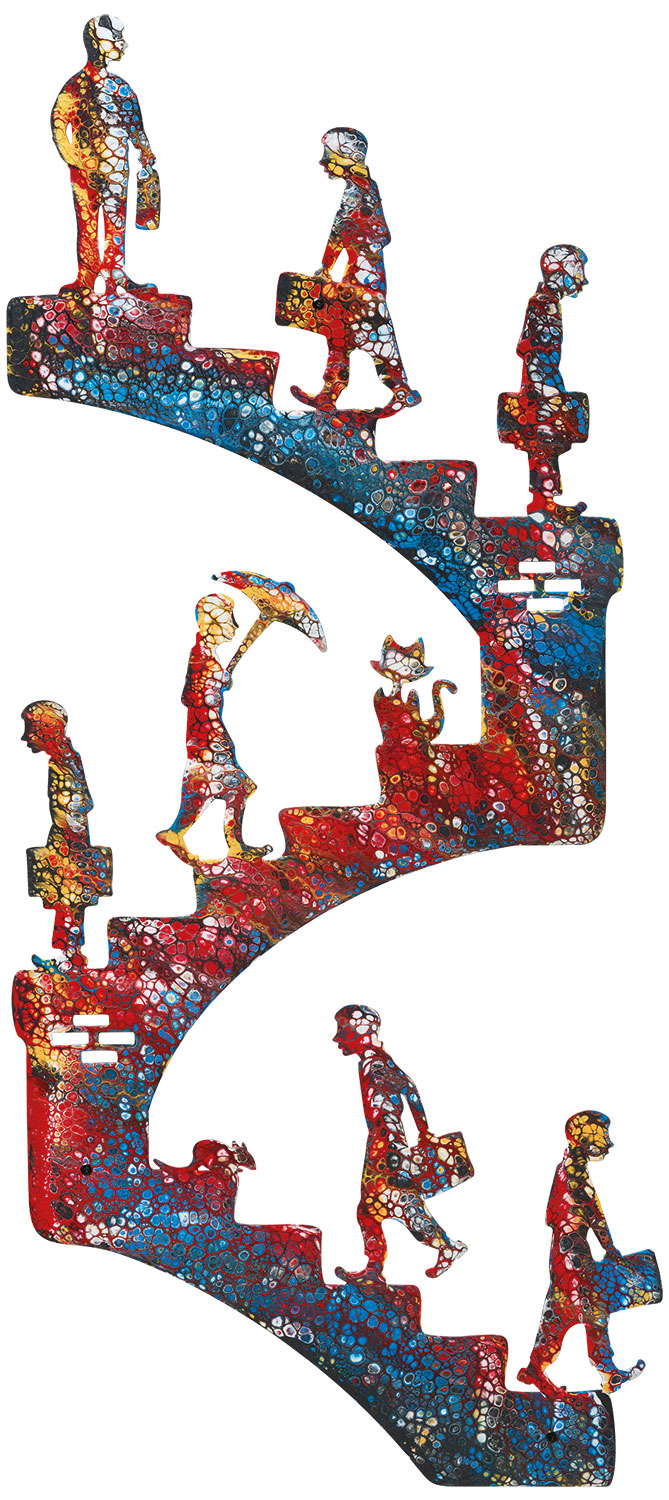
In the wall sculptures, only the silhouettes of the motifs are recognisable. The surfaces of the wall objects show no further details of the motif, but are covered with abstract, colourful and seemingly random patterns of acrylic paint. The contrast between the defined, figurative silhouette and the surreal sea of colours creates a unique and exciting aesthetic. The elaborate production process always begins with hand-drawn sketches. Based on these, the outlines of the motif are cut out of the metal using a laser. This blank is primed and then painted with acrylic paint. Finally, the colour is smudged with a leather cloth and the surface is briefly heated with a flame to create small irregularities and bubbles. Such processing steps mean that the result is always unpredictable and each object is unique with a unique shape and colour structure. Wall sculpture 'Walking in the Rain': As we all know, rain is followed by sunshine and with the right equipment, even a heavy downpour won't spoil your mood on a family outing. The laser-cut steel wall object impressively combines four figures with two umbrellas to create a harmonious overall composition. The hand-painting and subsequent elaborate processing creates a lively surface design. Size 60 x 55 x 1 cm (H/W/D). Weight 2.5 kg.
In the wall sculptures, only the silhouettes of the motifs are recognisable. The surfaces of the wall objects show no further details of the motif, but are covered with abstract, colourful and seemingly random patterns of acrylic paint. The contrast between the defined, figurative silhouette and the surreal sea of colours creates a unique and exciting aesthetic. The elaborate production process always begins with hand-drawn sketches. Based on these, the outlines of the motif are cut out of the metal using a laser. This blank is primed and then painted with acrylic paint. Finally, the colour is smudged with a leather cloth and the surface is briefly heated with a flame to create small irregularities and bubbles. Such processing steps mean that the result is always unpredictable and each object becomes a unique piece with a unique shape and colour structure, and the expressive colouring of the artwork for the wall makes you think about your own goals. Made from steel. Size 113 x 45 x 1 cm (H/W/D). Weight 3.8 kg. With hanging device and spacer.
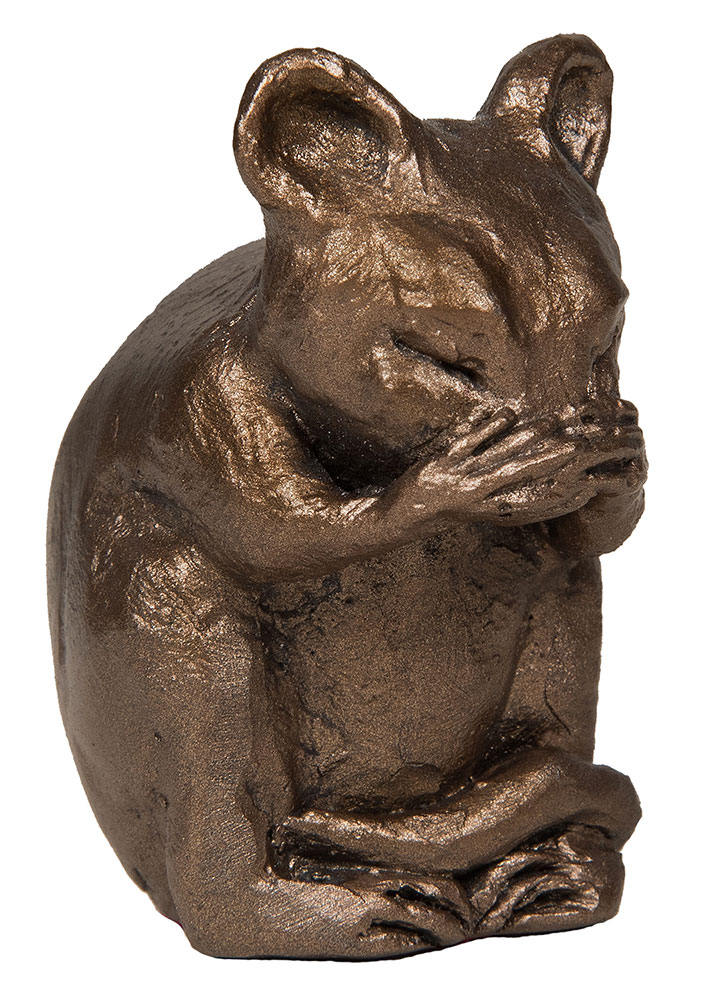
This cute animal is busy with its morning toilet. Edition in art bronze, cast by hand, with bronzed surface. Size 6 x 5 x 4 cm (h/w/d). Weight approx. 0.75 kg.
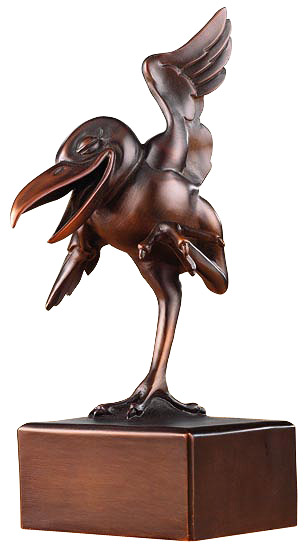
Exclusively at ars mundi, one of Busch's most famous characters has been lovingly realised as a sculptor's model. Finally discover 'Hans Huckebein' from all sides - a sight that will make you smile again and again! ars mundi sculptor's model based on Wilhelm Busch's humorous drawings from 1870. Cast metal with bronzed surface, cast by hand. Size 10.5 x 23 x 11.5 cm (W/H/D). Weight 2.2 kg.
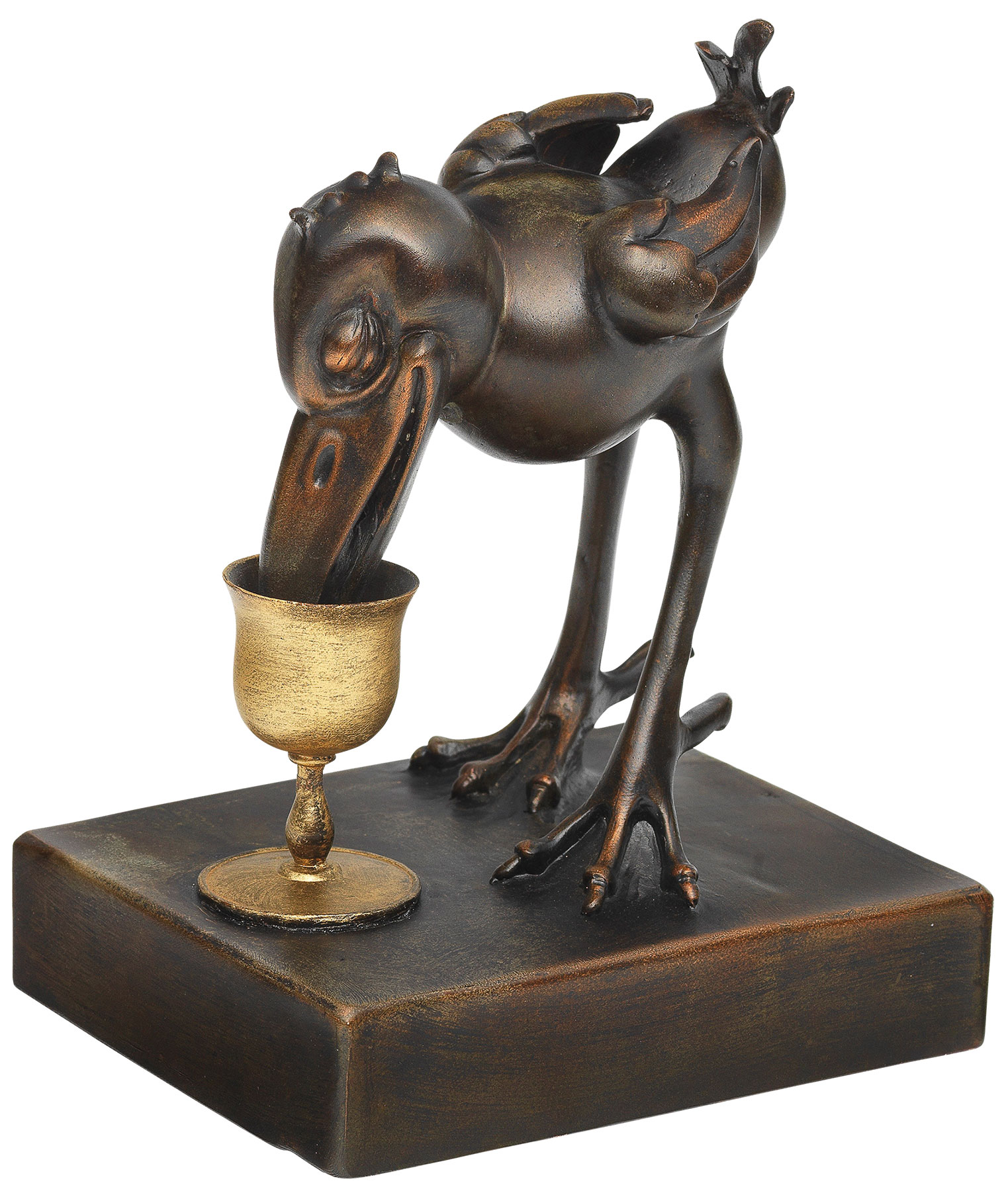
Exclusively at ars mundi, one of Busch's most famous characters has been lovingly realised as a sculptor's model. Finally discover 'Hans Huckebein' from all sides - a sight that will always make you smile! ars mundi sculptor's model based on Wilhelm Busch's humorous drawings from 1870. Cast metal with bronzed surface, cast by hand. Size 12.5 x 10 x 16 cm (W/H/D), weight approx. 3 kg.
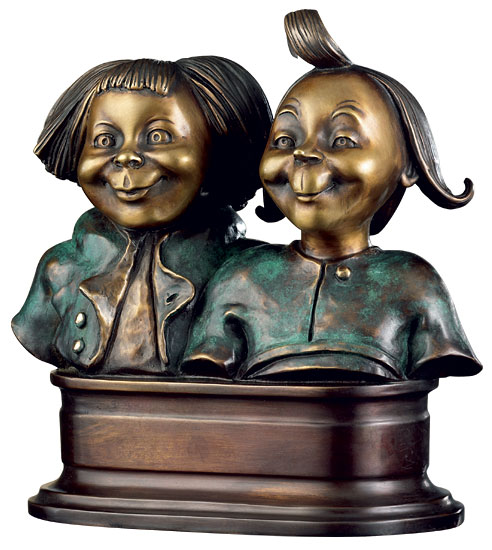
ars mundi sculptor's model, designed after Wilhelm Busch's humorous drawings from 1865. Edition in polymer art bronze. Patinated and polished by hand. Size 19 x 19.5 x 9 cm. Weight 3 kg.
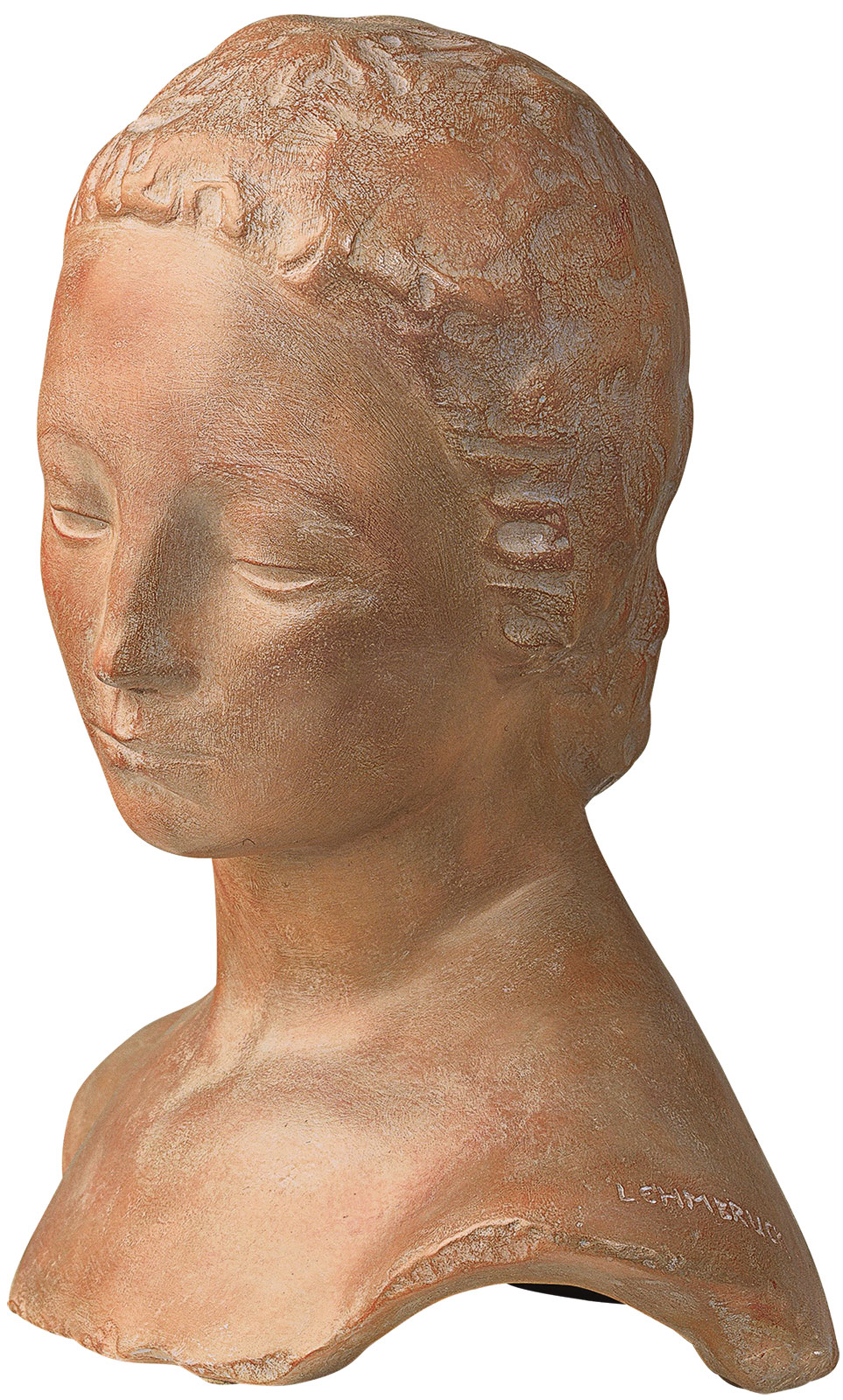
Lehmbruck's art, like that of many sculptors of his time, was influenced by the work of Auguste Rodin. His motif is the human being, whereby he often detaches himself from real body proportions in order to achieve a stronger pictorial expression. Like Rodin, he later concentrated on individual parts of the body; the 'Lowered Head of a Woman' is ultimately part of his 'Large Standing Woman' from 1910, which he varied as a bust by limiting it to the head, neck and shoulder base. Sculpture 'Lowered Head of a Woman': Edition in cast stone with terracotta-coloured patina. Directly moulded from the original and reduced in size (reduction). Limited edition of 980 copies, individually numbered and with the signature taken from the original. ars mundi exclusive edition, published in collaboration with the Kunsthalle Bremen. With numbered certificate of authenticity and limitation. Size 23 x 23 x 13 cm (H/W/D). Weight 2.9 kg. 'Wilhelm Lehmbruck is one of the pioneers of modern sculpture, but he has always remained true to the human figure and a fundamental humanity. In my opinion, this manifests itself particularly beautifully in the 'Lowered Head of a Woman' from 1910. The sculptor is closely associated with the Kunsthalle Bremen, partly because of the then director Siegfried Salzmann, who previously headed the Lehmbruck Museum in Duisburg. (Prof. Dr Christoph Grunenberg, Director of the Kunsthalle Bremen)
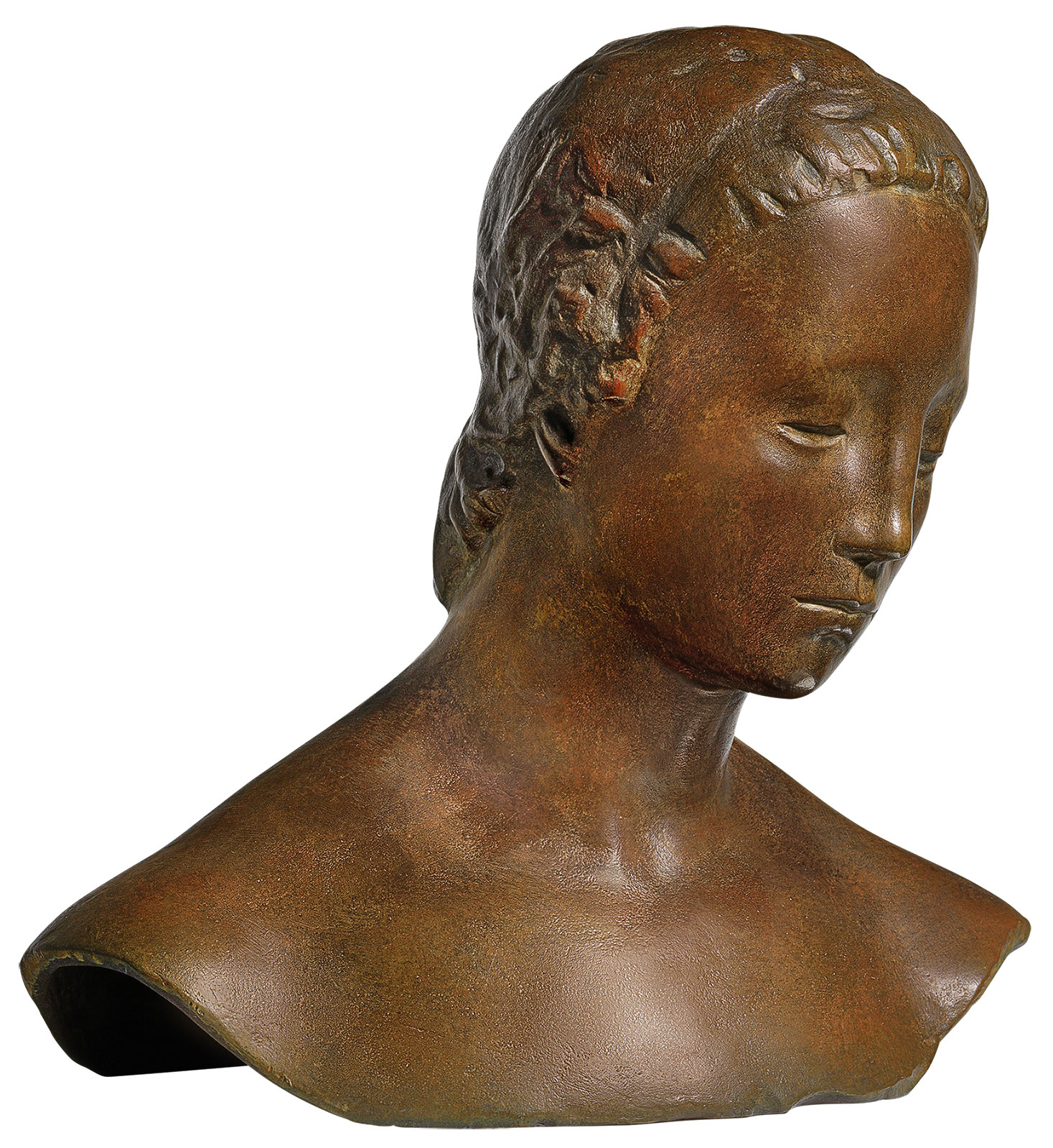
Lehmbruck's art, like that of many sculptors of his time, was influenced by the work of Auguste Rodin. His motif is the human being, whereby he often detaches himself from real body proportions in order to achieve a stronger pictorial expression. Like Rodin, he later concentrated on individual parts of the body; the 'Lowered Head of a Woman' is ultimately part of his 'Large Standing Woman' from 1910, which he varied as a bust by limiting it to the head, neck and shoulder base. Sculpture 'Gesenkter Frauenkopf': Edition in fine bronze, cast by hand using the lost wax technique, chiselled, polished and patinated red-brown. Moulded directly from the original and reduced in size (reduction). Limited edition of 980 copies, individually numbered and bearing the signature and foundry mark taken from the original. ars mundi exclusive edition, published in collaboration with the Kunsthalle Bremen. With numbered certificate of authenticity and limitation. Size 23 x 23 x 13 cm (h/w/d). Weight 4.5 kg. 'Wilhelm Lehmbruck is one of the pioneers of modern sculpture, but he always remained true to the human figure and a fundamental humanity. In my opinion, this manifests itself particularly beautifully in the 'Lowered Head of a Woman' from 1910. The sculptor is closely associated with the Kunsthalle Bremen, partly because of the then director Siegfried Salzmann, who previously headed the Lehmbruck Museum in Duisburg. (Prof. Dr Christoph Grunenberg, Director of the Kunsthalle Bremen)
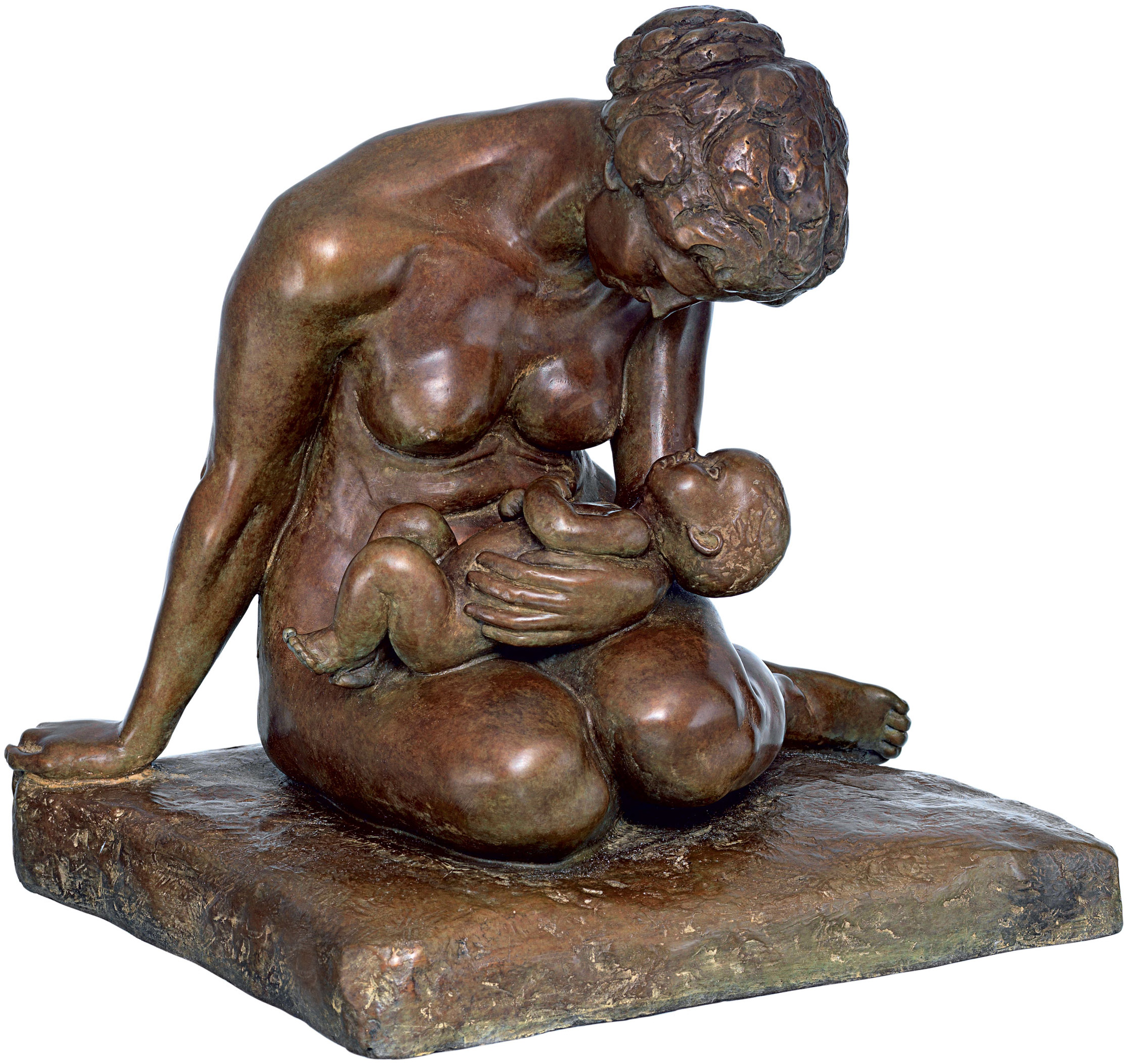
The theme of 'mother and child' occupied Lehmbruck throughout his life. The 1907 version is a central work from his first Paris exhibition; it shows the mother as a happy-loving woman and is still clearly indebted to classical sculpture. Lehmbruck's outstanding sense of scale and proportion already heralds the sculptural intensification of later works. The sculpture was created after Lehmbruck's first trip to Italy and its Pietà gesture is probably modelled on the Old Masters admired there. Sculptor's model based on the original, size 25.5 x 26 x 22 cm (W/H/D). Edition in fine bronze. Cast using the elaborate lost wax technique, patinated and polished by hand. Weight approx. 8.4 kg.
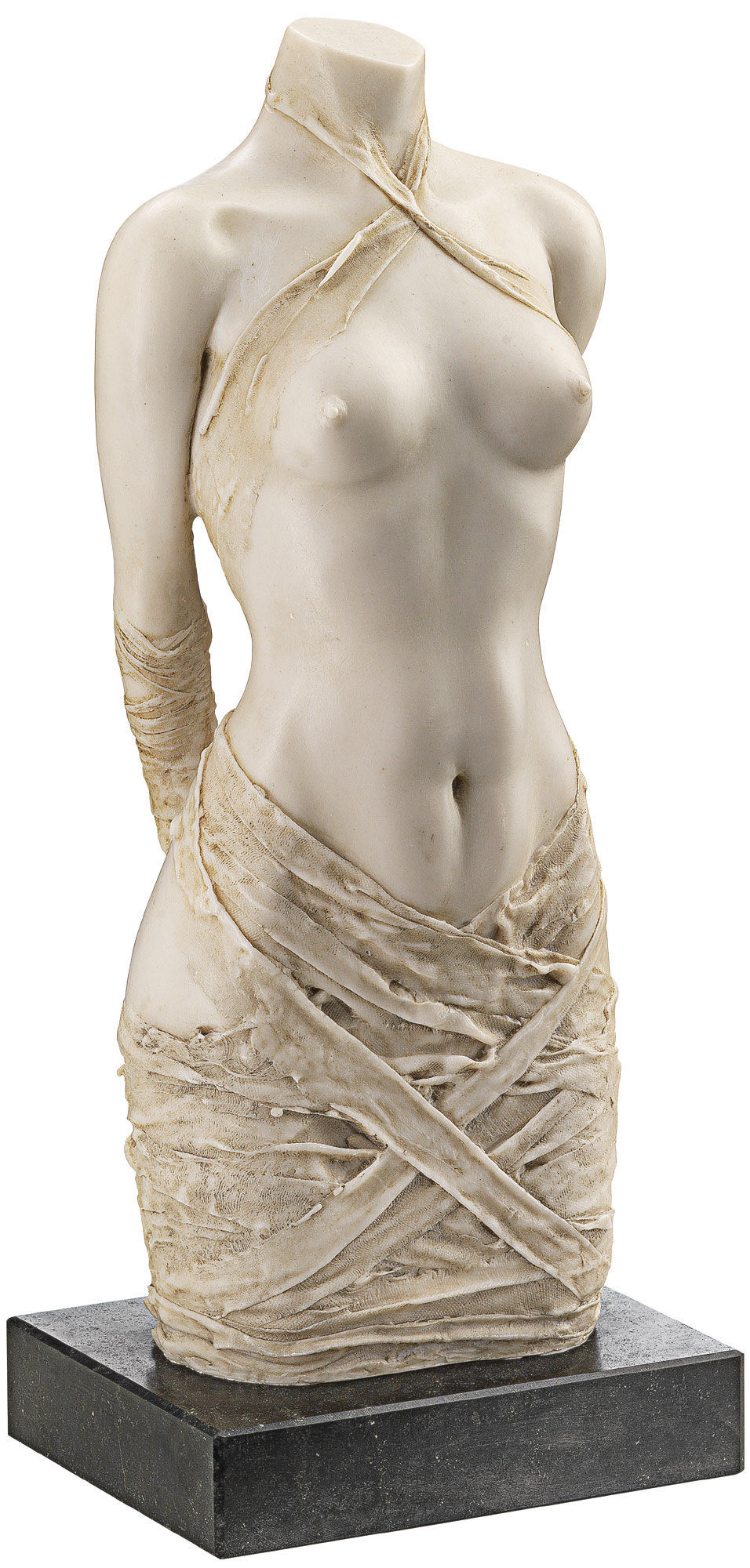
Kissmer: The mysterious aura of feminine perfectionThe true nature of the body is three-dimensional, haptic. This is what detail artist Willi Kissmer focussed on in his sculptural works. The invisible side, which creates a subtle tension in his paintings, can now be seen. With his sensitive, almost hyper-realistic formal language based on his graphic talent, Kissmer succeeded in maintaining the sizzling eroticism of the motif all around. The enveloping fabric becomes the unmistakable spice of visual pleasure. Kissmer concentrated on the expressive centre of the female body and turned it into a highly personal projection surface for the viewer. This is what perfects the works of the internationally renowned artist. Edition in cast stone, cast by hand. Limited edition of 299 copies, numbered and signed. Format 34.5 x 14 x 11 cm (H/W/D). Weight 4272 g. Base 3 x 14 x 11 cm (h/w/d). ars mundi exclusive edition.
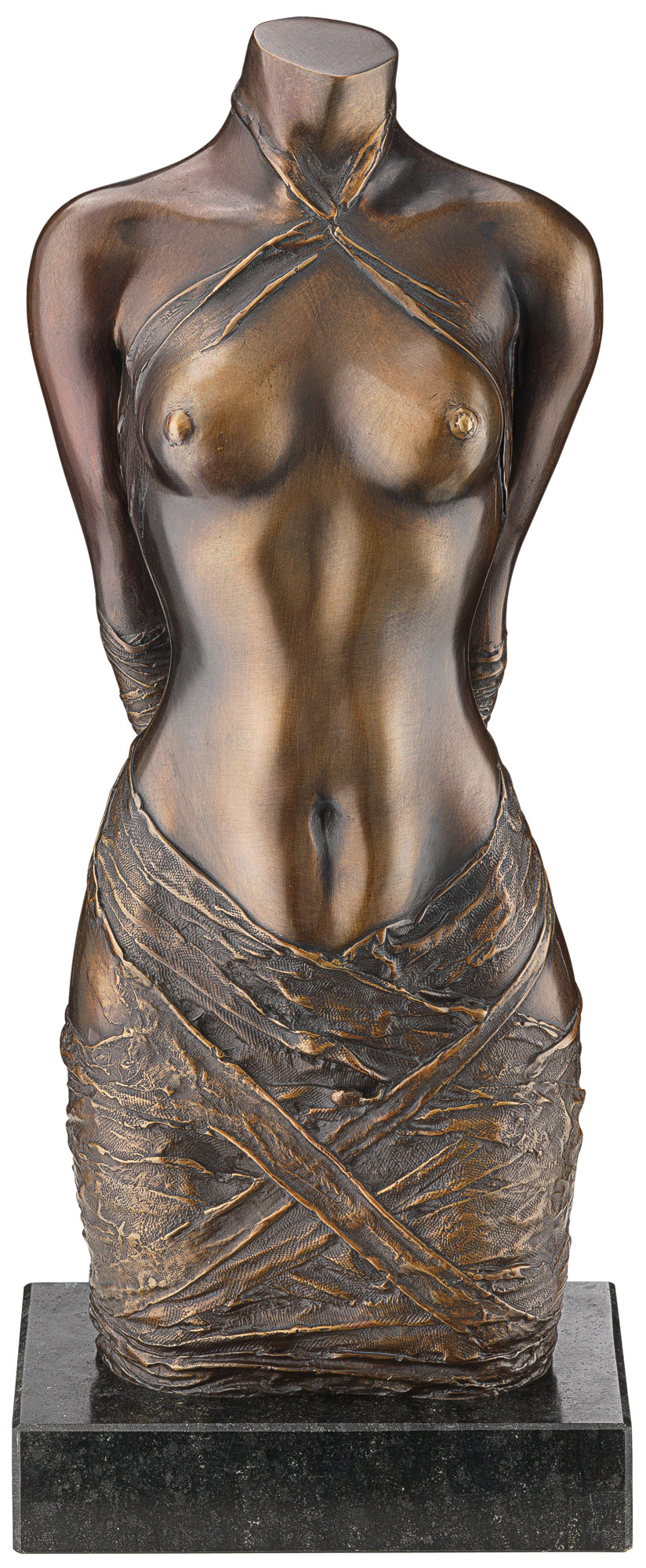
Kissmer: The mysterious aura of feminine perfectionThe true nature of the body is three-dimensional, haptic. This is what detail artist Willi Kissmer focussed on in his sculptural works. The invisible side, which creates a subtle tension in his paintings, can now be seen. With his sensitive, almost hyper-realistic formal language based on his graphic talent, Kissmer succeeded in maintaining the sizzling eroticism of the motif all around. The enveloping fabric becomes the unmistakable spice of visual pleasure. Kissmer concentrated on the expressive centre of the female body and turned it into a highly personal projection surface for the viewer. This is what perfects the works of the internationally renowned artist. Edition in bronze, partially gold-plated. Cast using the lost wax technique, finely patinated and polished. Limited edition of 199 copies, numbered and signed. Size 34.5 x 14 x 11 cm (h/w/d). Weight 4.9 kg. Base 3 x 14 x 11 cm (h/w/d). ars mundi exclusive edition.
Kissmer: The mysterious aura of feminine perfectionThe true nature of the body is three-dimensional, haptic. This is what detail artist Willi Kissmer focussed on in his sculptural works. The invisible side, which creates a subtle tension in his paintings, can now be seen. With his sensitive, almost hyper-realistic formal language based on his graphic talent, Kissmer succeeded in maintaining the sizzling eroticism of the motif all around. The enveloping fabric becomes the unmistakable spice of visual pleasure. Kissmer concentrated on the expressive centre of the female body and turned it into a highly personal projection surface for the viewer. This is what perfects the works of the internationally renowned artist. Edition in bronze. Cast using the lost wax technique, finely patinated and polished. Limited edition of 199 copies, numbered and signed. Size 34.5 x 14 x 11 cm (h/w/d). Weight 4973 g. Base 3 x 14 x 11 cm (h/w/d). ars mundi exclusive edition.
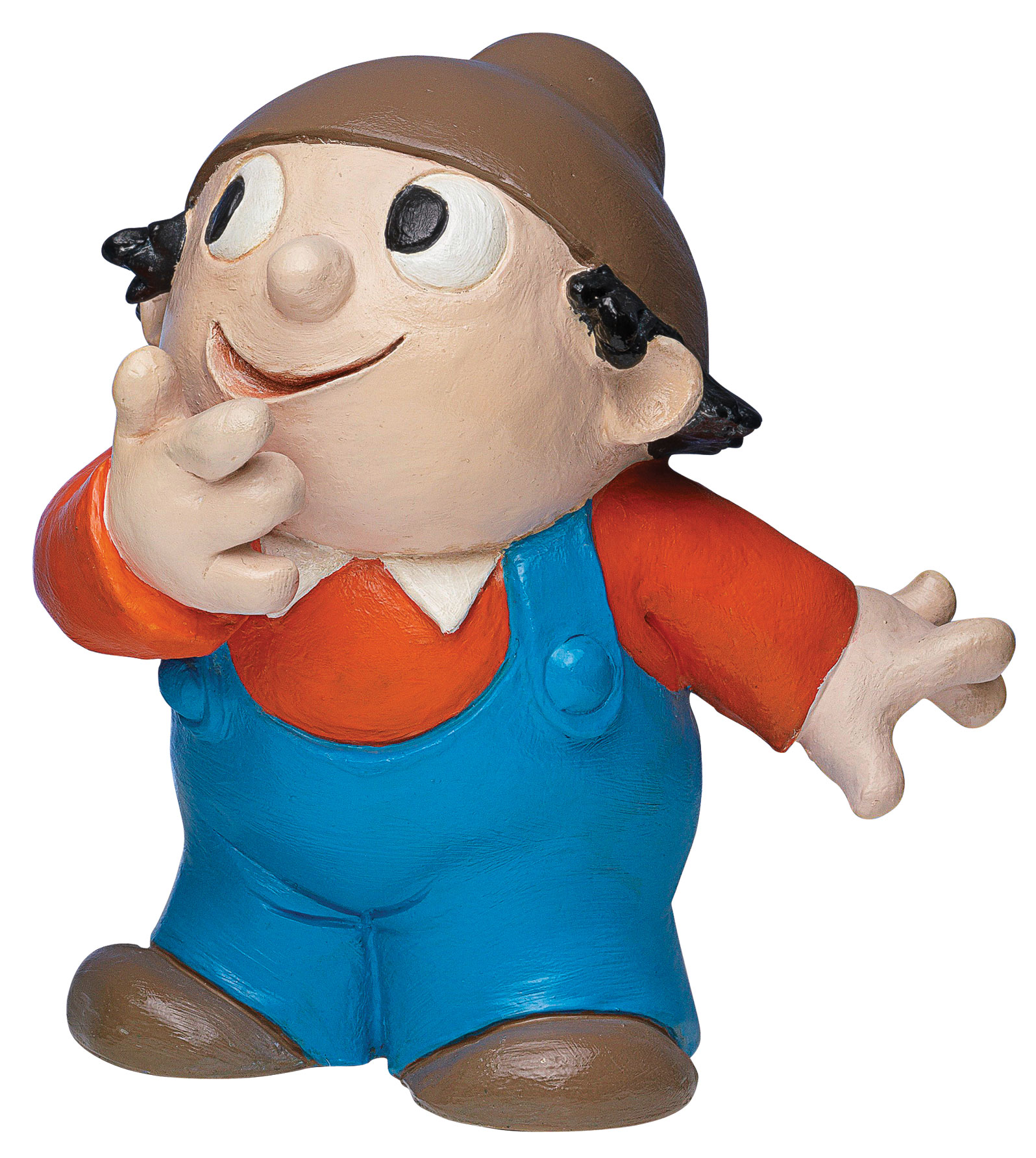
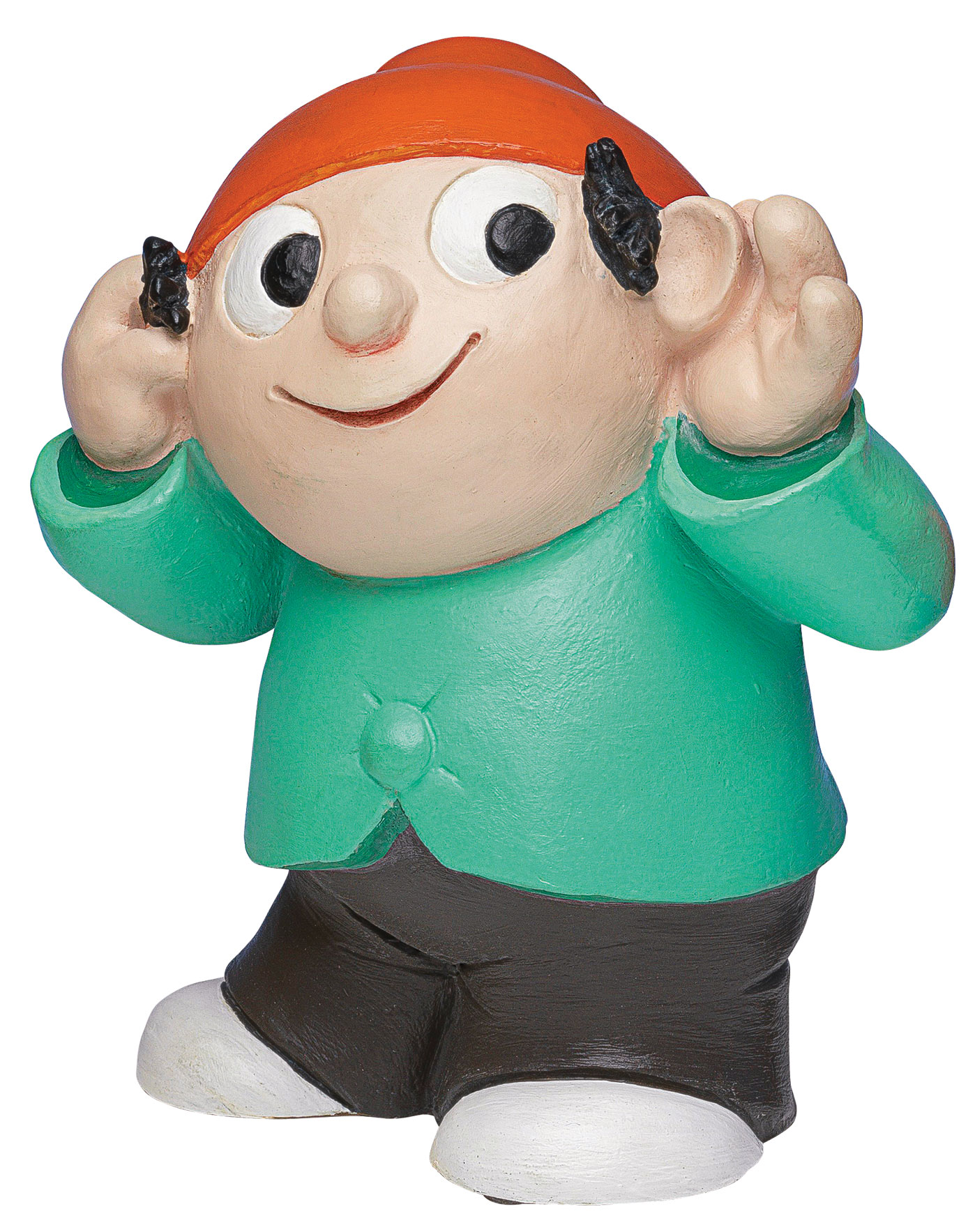
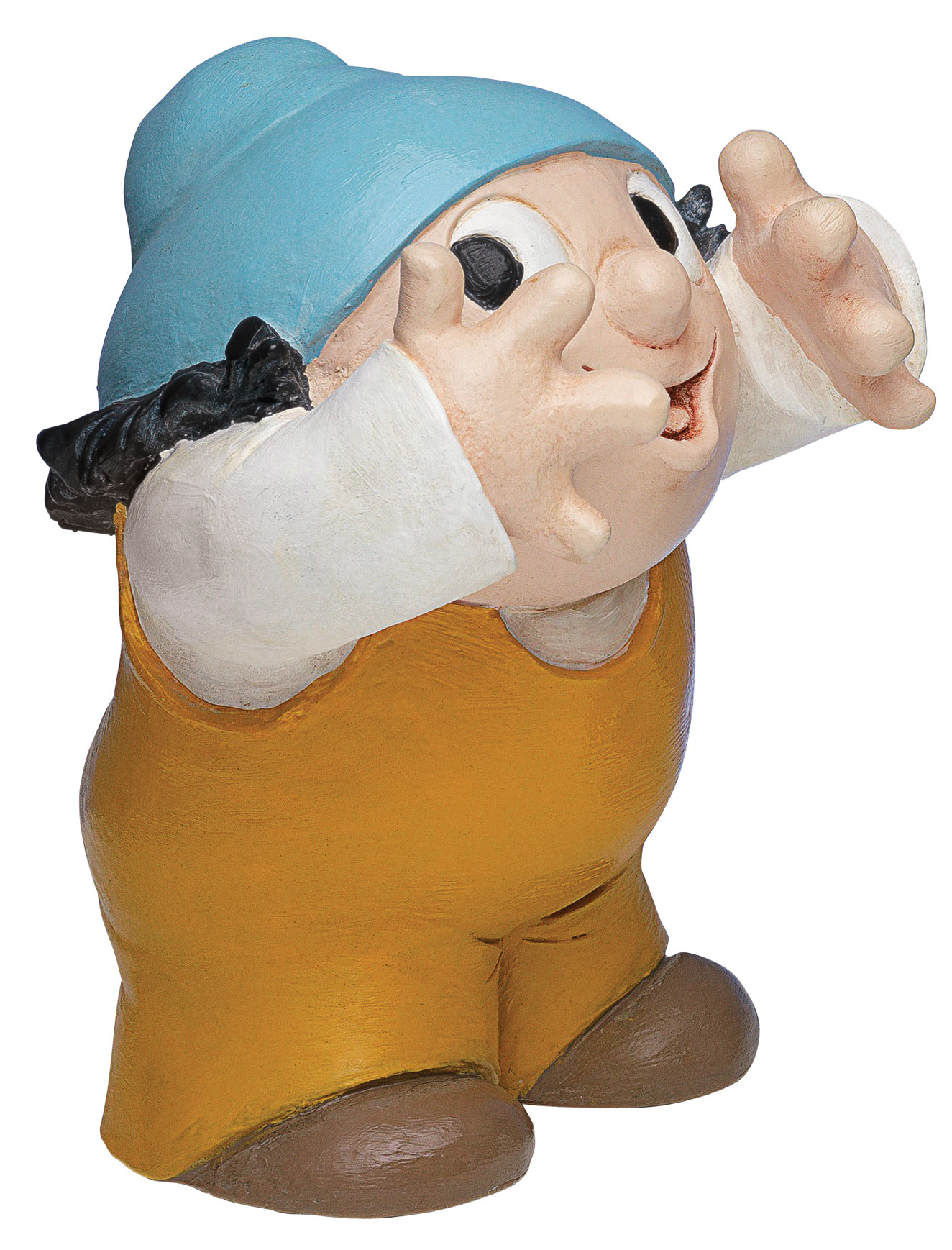
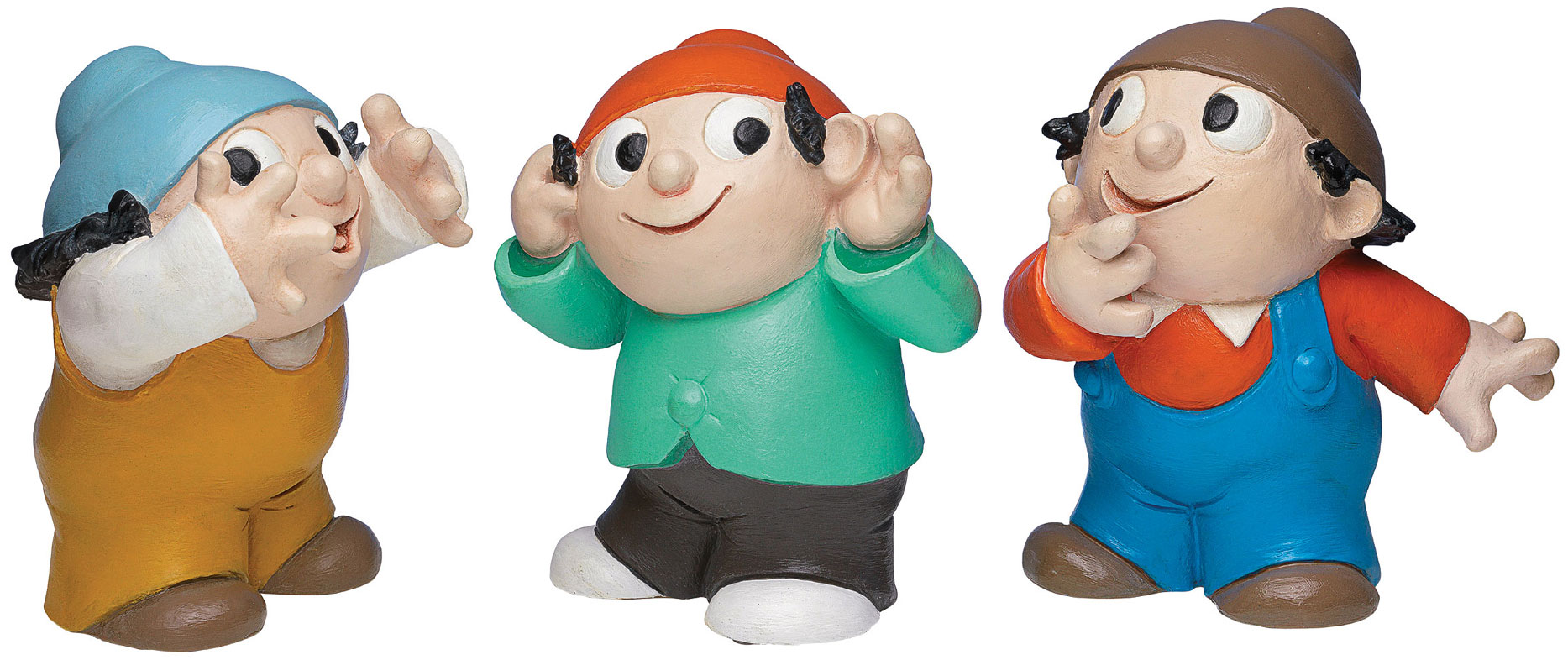
World premiere: Mainzelmännchen - exclusive edition at ars mundi for the 50th stage anniversary in 2013The true television stars wear neither dinner jackets nor evening dresses - they wear pointed caps. And they can look back on a career spanning almost 50 years. Reason enough to erect a small monument to the Mainzelmännchen - in precious bronze and cast stone. The Mainzelmännchen are cult. They have been part of our everyday lives since 2 April 1963 and many of us have taken Anton, Berti, Conni, Det, Edi and Fritzchen to our hearts as children. After almost 50 years of television careers with over 40,000 of their short adverts, the 3 Mainzelmännchen are now available for the first time in bronze and cast stone - sculpted by their spiritual father, the graphic artist and set designer Wolf Gerlach himself, and released by him and ZDF in a strictly limited edition exclusively for ars mundi. Just as the little TV stars were created picture by picture with pencil drawings, their sculptural realisation was also to be of the highest level of craftsmanship. The art foundry we chose guarantees the utmost care in casting and post-processing, such as sanding and chiselling the raw casting by hand through to patination. The multi-coloured patination is a particular challenge. Because just as each of the Mainzelmännchen has its own name and character, it can also be recognised by its clothing. To dress Anton in a red shirt and blue trousers, for example, an extraordinarily complex patination process is required, in which the colours have to be applied in a precisely coordinated sequence and at different temperatures. This requires many years of manual experience and the patineur's dexterity. The results are small works of art, as befits the Mainzelmännchen. And Wolf Gerlach's signature confirms that they are in no way inferior to their famous drawn role models in artistic terms - each one bears his signature. Mainzelmännchen 'Anton', edition in cast stone: The limited edition of 1,499 pieces in high-quality, hand-painted cast stone with Gerlach's signature, individually numbered ars mundi exclusive edition. With hand-numbered certificate. Format approx. 13 x 15 x 11 cm (W/H/D). Weight approx. 1.4 kg.
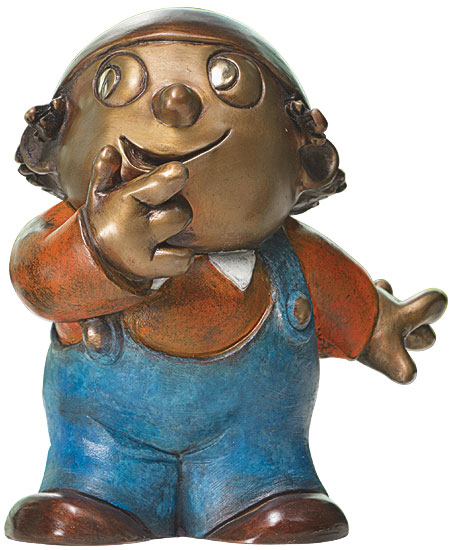
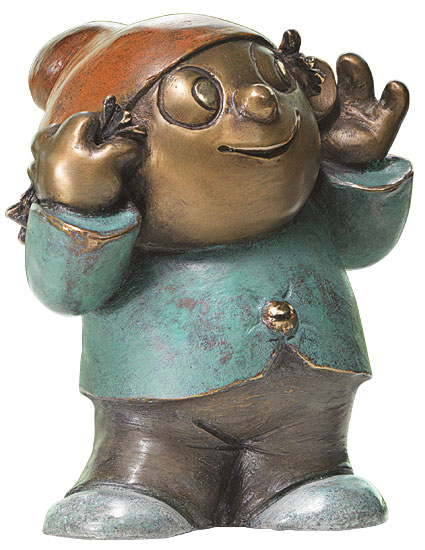
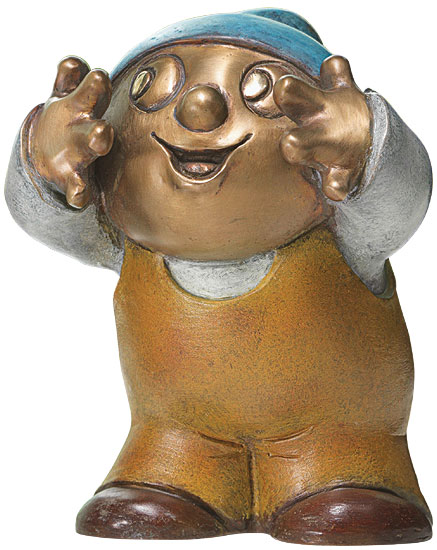
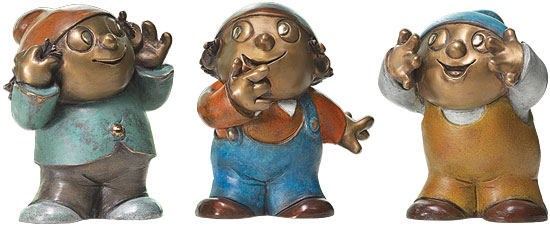
World premiere: Mainzelmännchen - exclusive edition at ars mundi for the 50th stage anniversary in 2013The true television stars wear neither dinner jackets nor evening dresses - they wear pointed caps. And they can look back on a career spanning almost 50 years. Reason enough to erect a small monument to the Mainzelmännchen - in precious bronze and cast stone. The Mainzelmännchen are cult. They have been part of our everyday lives since 2 April 1963 and many of us have taken Anton, Berti, Conni, Det, Edi and Fritzchen to our hearts as children. After almost 50 years of television careers with over 40,000 of their short adverts, the 3 Mainzelmännchen are now available for the first time in bronze and cast stone - sculpted by their spiritual father, the graphic artist and set designer Wolf Gerlach himself, and released by him and ZDF in a strictly limited edition exclusively for ars mundi. Just as the little TV stars were created picture by picture with pencil drawings, their sculptural realisation was also to be of the highest level of craftsmanship. The art foundry we chose guarantees the utmost care in casting and post-processing, such as sanding and chiselling the raw casting by hand through to patination. The multi-coloured patination is a particular challenge. Because just as each of the Mainzelmännchen has its own name and character, it can also be recognised by its clothing. To dress Anton in a red shirt and blue trousers, for example, an extraordinarily complex patination process is required, in which the colours have to be applied in a precisely coordinated sequence and at different temperatures. This requires many years of manual experience and the patineur's dexterity. The results are small works of art, as befits the Mainzelmännchen. And Wolf Gerlach's signature confirms that they are in no way inferior to their famous drawn role models in artistic terms - each one bears his signature. Mainzelmännchen 'Anton', edition in cast bronze: The limited edition of 499 pieces in multi-coloured patinated bronze is cast with great craftsmanship using the traditional lost wax process. Each piece is created exclusively for ars mundi, bears Gerlach's signature and is individually numbered. With hand-numbered certificate. Format approx. 13 x 15 x 11 cm (W/H/D). Weight approx. 2.3 kg.
World premiere: Mainzelmännchen - exclusive edition at ars mundi for the 50th stage anniversary in 2013The true television stars wear neither dinner jackets nor evening dresses - they wear pointed caps. And they can look back on a career spanning almost 50 years. Reason enough to erect a small monument to the Mainzelmännchen - in precious bronze and cast stone. The Mainzelmännchen are cult. They have been part of our everyday lives since 2 April 1963 and many of us have taken Anton, Berti, Conni, Det, Edi and Fritzchen to our hearts as children. After almost 50 years of television careers with over 40,000 of their short adverts, the 3 Mainzelmännchen are now available for the first time in bronze and cast stone - sculpted by their spiritual father, the graphic artist and set designer Wolf Gerlach himself, and released by him and ZDF in a strictly limited edition exclusively for ars mundi. Just as the little TV stars were created picture by picture with pencil drawings, their sculptural realisation was also to be of the highest level of craftsmanship. The art foundry we chose guarantees the utmost care in casting and post-processing, such as sanding and chiselling the raw casting by hand through to patination. The multi-coloured patination is a particular challenge. Because just as each of the Mainzelmännchen has its own name and character, it can also be recognised by its clothing. To dress Anton in a red shirt and blue trousers, for example, an extraordinarily complex patination process is required, in which the colours have to be applied in a precisely coordinated sequence and at different temperatures. This requires many years of manual experience and the patineur's dexterity. The results are small works of art, as befits the Mainzelmännchen. And Wolf Gerlach's signature confirms that they are in no way inferior to their famous drawn role models in artistic terms - each one bears his signature. Mainzelmännchen 'Berti', edition in cast stone: The limited edition of 1,499 pieces in high-quality, hand-painted cast stone with Gerlach's signature, individually numbered ars mundi exclusive edition. With hand-numbered certificate. Format approx. 13 x 15 x 11 cm (W/H/D). Weight approx. 1.4 kg.
World premiere: Mainzelmännchen - exclusive edition at ars mundi for the 50th stage anniversary in 2013The true television stars wear neither dinner jackets nor evening dresses - they wear pointed caps. And they can look back on a career spanning almost 50 years. Reason enough to erect a small monument to the Mainzelmännchen - in precious bronze and cast stone. The Mainzelmännchen are cult. They have been part of our everyday lives since 2 April 1963 and many of us have taken Anton, Berti, Conni, Det, Edi and Fritzchen to our hearts as children. After almost 50 years of television careers with over 40,000 of their short adverts, the 3 Mainzelmännchen are now available for the first time in bronze and cast stone - sculpted by their spiritual father, the graphic artist and set designer Wolf Gerlach himself, and released by him and ZDF in a strictly limited edition exclusively for ars mundi. Just as the little TV stars were created picture by picture with pencil drawings, their sculptural realisation was also to be of the highest level of craftsmanship. The art foundry we chose guarantees the utmost care in casting and post-processing, such as sanding and chiselling the raw casting by hand through to patination. The multi-coloured patination is a particular challenge. Because just as each of the Mainzelmännchen has its own name and character, it can also be recognised by its clothing. To dress Anton in a red shirt and blue trousers, for example, an extraordinarily complex patination process is required, in which the colours have to be applied in a precisely coordinated sequence and at different temperatures. This requires many years of manual experience and the patineur's dexterity. The results are small works of art, as befits the Mainzelmännchen. And Wolf Gerlach's signature confirms that they are in no way inferior to their famous drawn role models in artistic terms - each one bears his signature. Mainzelmännchen 'Berti', edition in cast bronze: The limited edition of 499 pieces in multi-coloured patinated bronze is cast with great craftsmanship using the traditional lost wax process. Each piece is created exclusively for ars mundi, bears Gerlach's signature and is individually numbered. With hand-numbered certificate. Format approx. 13 x 15 x 11 cm (W/H/D). Weight approx. 2.3 kg.
World premiere: Mainzelmännchen - exclusive edition at ars mundi for the 50th stage anniversary in 2013The true television stars wear neither dinner jackets nor evening dresses - they wear pointed caps. And they can look back on a career spanning almost 50 years. Reason enough to erect a small monument to the Mainzelmännchen - in precious bronze and cast stone. The Mainzelmännchen are cult. They have been part of our everyday lives since 2 April 1963 and many of us have taken Anton, Berti, Conni, Det, Edi and Fritzchen to our hearts as children. After almost 50 years of television careers with over 40,000 of their short adverts, the 3 Mainzelmännchen are now available for the first time in bronze and cast stone - sculpted by their spiritual father, the graphic artist and set designer Wolf Gerlach himself, and released by him and ZDF in a strictly limited edition exclusively for ars mundi. Just as the little TV stars were created picture by picture with pencil drawings, their sculptural realisation was also to be of the highest level of craftsmanship. The art foundry we chose guarantees the utmost care in casting and post-processing, such as sanding and chiselling the raw casting by hand through to patination. The multi-coloured patination is a particular challenge. Because just as each of the Mainzelmännchen has its own name and character, it can also be recognised by its clothing. To dress Anton in a red shirt and blue trousers, for example, an extraordinarily complex patination process is required, in which the colours have to be applied in a precisely coordinated sequence and at different temperatures. This requires many years of manual experience and the patineur's dexterity. The results are small works of art, as befits the Mainzelmännchen. And Wolf Gerlach's signature confirms that they are in no way inferior to their famous drawn role models in artistic terms - each one bears his signature. Mainzelmännchen 'Conni', cast stone edition: The limited edition of 1,499 pieces in high-quality, hand-painted cast stone with Gerlach's signature, individually numbered ars mundi exclusive edition. With hand-numbered certificate. Format approx. 13 x 15 x 11 cm (W/H/D). Weight approx. 1.4 kg.
World premiere: Mainzelmännchen - exclusive edition at ars mundi for the 50th stage anniversary in 2013The true television stars wear neither dinner jackets nor evening dresses - they wear pointed caps. And they can look back on a career spanning almost 50 years. Reason enough to erect a small monument to the Mainzelmännchen - in precious bronze and cast stone. The Mainzelmännchen are cult. They have been part of our everyday lives since 2 April 1963 and many of us have taken Anton, Berti, Conni, Det, Edi and Fritzchen to our hearts as children. After almost 50 years of television careers with over 40,000 of their short adverts, the 3 Mainzelmännchen are now available for the first time in bronze and cast stone - sculpted by their spiritual father, the graphic artist and set designer Wolf Gerlach himself, and released by him and ZDF in a strictly limited edition exclusively for ars mundi. Just as the little TV stars were created picture by picture with pencil drawings, their sculptural realisation was also to be of the highest level of craftsmanship. The art foundry we chose guarantees the utmost care in casting and post-processing, such as sanding and chiselling the raw casting by hand through to patination. The multi-coloured patination is a particular challenge. Because just as each of the Mainzelmännchen has its own name and character, it can also be recognised by its clothing. To dress Anton in a red shirt and blue trousers, for example, an extraordinarily complex patination process is required, in which the colours have to be applied in a precisely coordinated sequence and at different temperatures. This requires many years of manual experience and the patineur's dexterity. The results are small works of art, as befits the Mainzelmännchen. And Wolf Gerlach's signature confirms that they are in no way inferior to their famous drawn role models in artistic terms - each one bears his signature. Mainzelmännchen 'Conni', cast bronze edition: The limited edition of 499 pieces in multi-coloured patinated bronze is cast with great craftsmanship using the traditional lost-wax casting process. Each piece is created exclusively for ars mundi, bears Gerlach's signature and is individually numbered. With hand-numbered certificate. Format approx. 13 x 15 x 11 cm (W/H/D). Weight approx. 2.3 kg.
50 years of screen experience, more than 40,000 short adverts and numerous other 'capers'. The Mainzelmännchen are cult. They have been part of our everyday lives since 2 April 1963 and many of us have already taken Anton, Berti, Conni, Det, Edi and Fritzchen to our hearts as children. To mark their 50th anniversary on stage in 2013, there is now another bronze sculpture in our Mainzelmännchen series. Sculpted by their spiritual father, the graphic artist and stage designer Wolf Gerlach himself, and released by him and ZDF in a strictly limited edition exclusively for ars mundi. Mainzelmännchen 'Det, the Thinker': Another star in the great succession of Rodin's 'Thinker': the clever Det, the Mainzelmännchen thinker. The limited edition of 499 pieces in multi-coloured patinated bronze is cast with great craftsmanship using the traditional lost wax technique. Each piece is created exclusively for ars mundi, bears Wolf Gerlach's signature and is individually numbered. Each sculpture is unique. With hand-numbered certificate. Format approx. 14.5 x 15 x 10 cm (W/H/D). Weight approx. 2.4 kg.
World premiere: Mainzelmännchen - exclusive edition at ars mundi for the 50th stage anniversary in 2013The true television stars wear neither dinner jackets nor evening dresses - they wear pointed caps. And they can look back on a career spanning almost 50 years. Reason enough to erect a small monument to the Mainzelmännchen - in precious bronze and cast stone. The Mainzelmännchen are cult. They have been part of our everyday lives since 2 April 1963 and many of us have taken Anton, Berti, Conni, Det, Edi and Fritzchen to our hearts as children. After almost 50 years of television careers with over 40,000 of their short adverts, the 3 Mainzelmännchen are now available for the first time in bronze and cast stone - sculpted by their spiritual father, the graphic artist and set designer Wolf Gerlach himself, and released by him and ZDF in a strictly limited edition exclusively for ars mundi. Just as the little TV stars were created picture by picture with pencil drawings, their sculptural realisation was also to be of the highest level of craftsmanship. The art foundry we chose guarantees the utmost care in casting and post-processing, such as sanding and chiselling the raw casting by hand through to patination. The multi-coloured patination is a particular challenge. Because just as each of the Mainzelmännchen has its own name and character, it can also be recognised by its clothing. To dress Anton in a red shirt and blue trousers, for example, an extraordinarily complex patination process is required, in which the colours have to be applied in a precisely coordinated sequence and at different temperatures. This requires many years of manual experience and the patineur's dexterity. The results are small works of art, as befits the Mainzelmännchen. And Wolf Gerlach's signature confirms that they are in no way inferior to their famous drawn role models in artistic terms - each one bears his signature. Three 'Mainzelmännchen': 'Conni', 'Berti' and 'Anton', edition in cast stone: limited edition of 1,499 pieces in high-quality, hand-painted cast stone with Gerlach's signature, individually numbered ars mundi exclusive edition. With hand-numbered certificate. Format each approx. 13 x 15 x 11 cm (W/H/D). Each weighing approx. 1.4 kg, the complete trio as a set with standardised numbering.
World premiere: Mainzelmännchen - exclusive edition at ars mundi for the 50th stage anniversary in 2013The true television stars wear neither dinner jackets nor evening dresses - they wear pointed caps. And they can look back on a career spanning almost 50 years. Reason enough to erect a small monument to the Mainzelmännchen - in precious bronze and cast stone. The Mainzelmännchen are cult. They have been part of our everyday lives since 2 April 1963 and many of us have taken Anton, Berti, Conni, Det, Edi and Fritzchen to our hearts as children. After almost 50 years of television careers with over 40,000 of their short adverts, the 3 Mainzelmännchen are now available for the first time in bronze and cast stone - sculpted by their spiritual father, the graphic artist and set designer Wolf Gerlach himself, and released by him and ZDF in a strictly limited edition exclusively for ars mundi. Just as the little TV stars were created picture by picture with pencil drawings, their sculptural realisation was also to be of the highest level of craftsmanship. The art foundry we chose guarantees the utmost care in casting and post-processing, such as sanding and chiselling the raw casting by hand through to patination. The multi-coloured patination is a particular challenge. Because just as each of the Mainzelmännchen has its own name and character, it can also be recognised by its clothing. To dress Anton in a red shirt and blue trousers, for example, an extraordinarily complex patination process is required, in which the colours have to be applied in a precisely coordinated sequence and at different temperatures. This requires many years of manual experience and the patineur's dexterity. The results are small works of art, as befits the Mainzelmännchen. And Wolf Gerlach's signature confirms that they are in no way inferior to their famous drawn role models in artistic terms - each one bears his signature. Three 'Mainzelmännchen': 'Berti', 'Anton' and 'Conni', edition in cast bronze: The limited edition of 499 pieces in multi-coloured patinated bronze is cast with great craftsmanship using the traditional lost wax process. Each piece is created exclusively for ars mundi, bears Gerlach's signature and is individually numbered. With hand-numbered certificate. Format each approx. 13 x 15 x 11 cm (W/H/D). Each weighing approx. 2.3 kg, the complete trio as a set with standardised numbering.
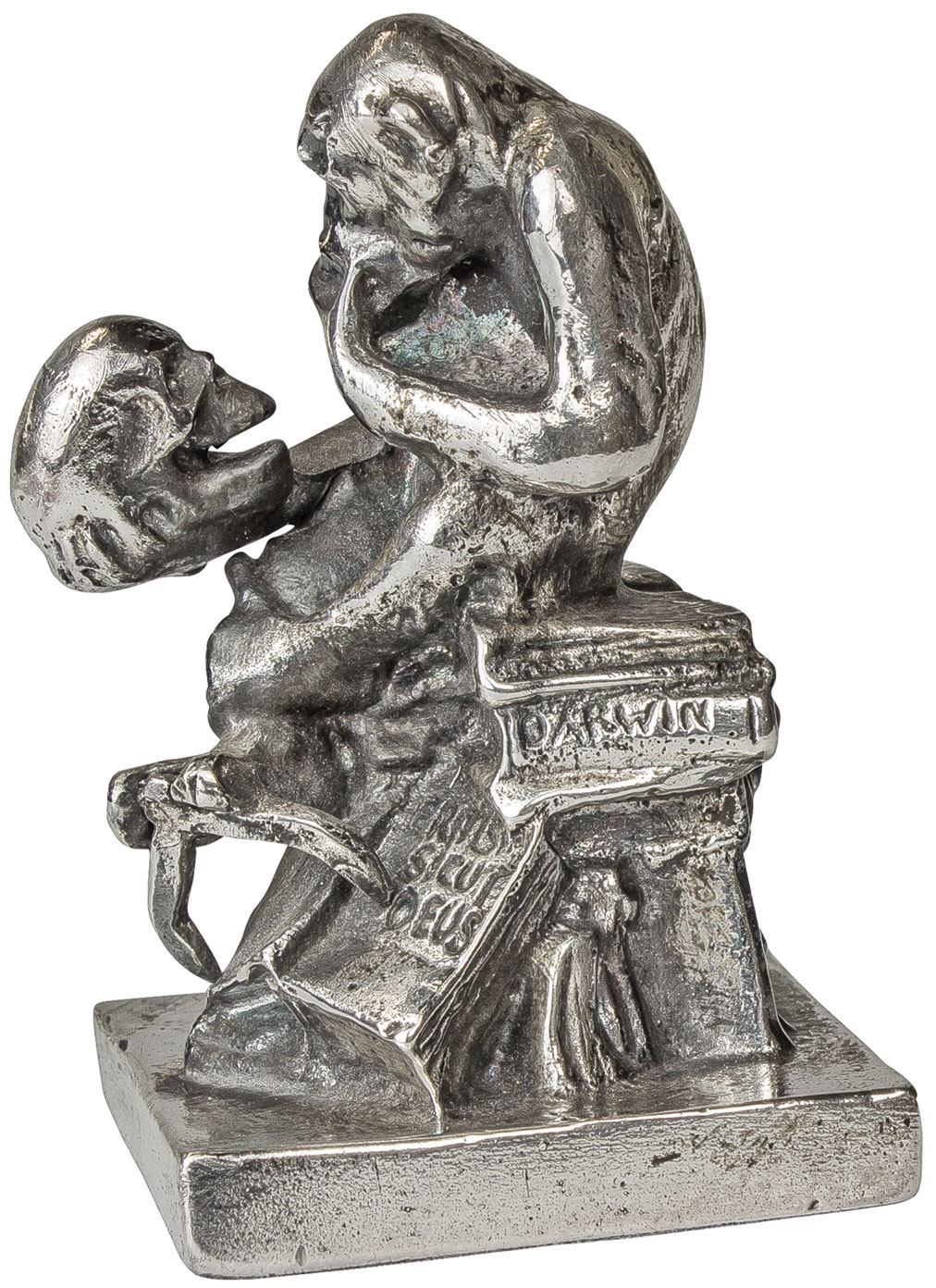
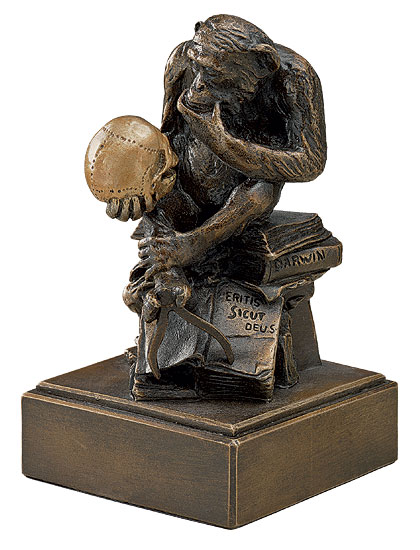
This sculpture casts the debate surrounding Charles Darwin's work in an almost iconographic form. Cast metal with silver-plated surface. Size 8 x 5 x 4.8 cm (h/w/d).
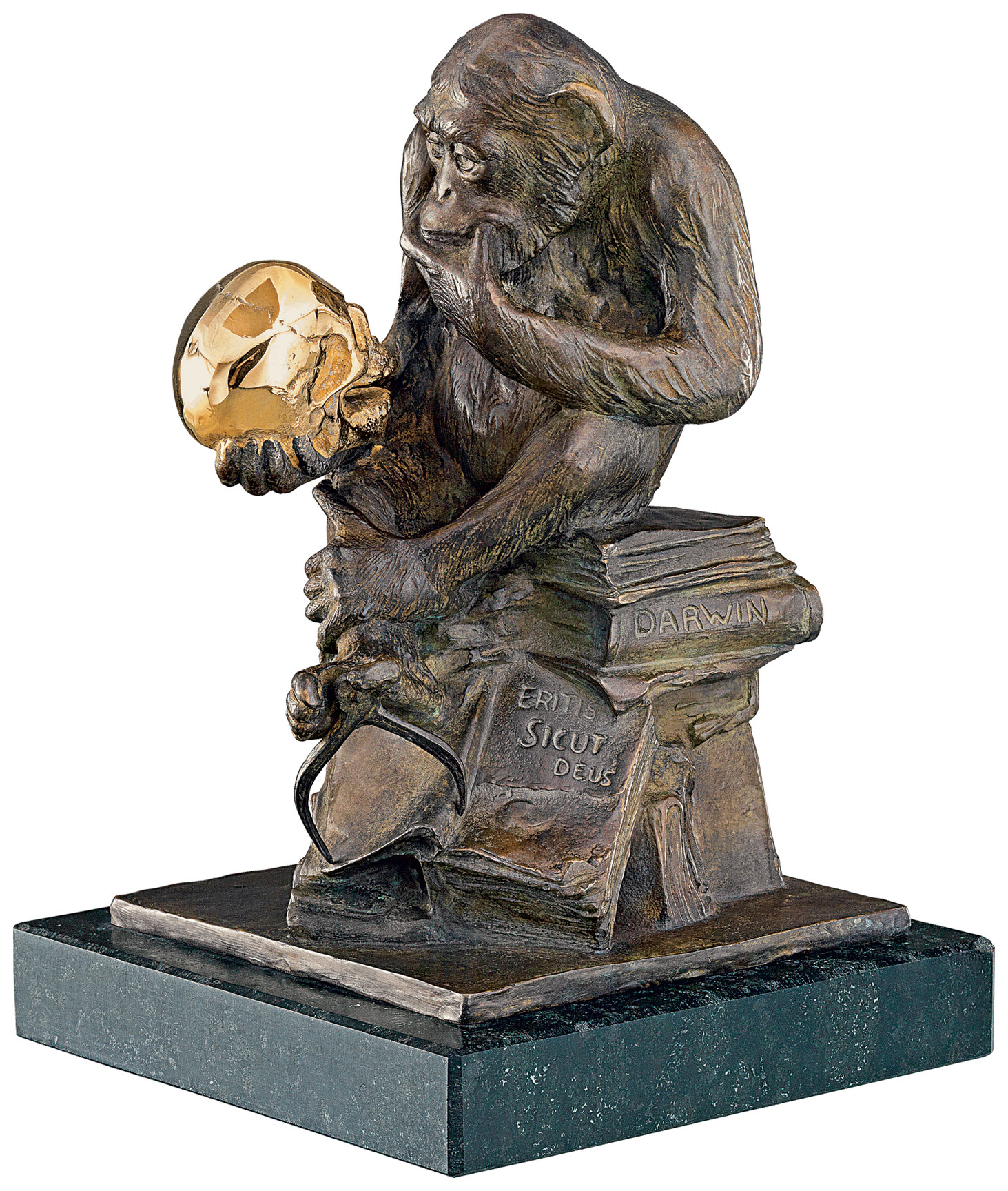
With the sculpture 'Monkey with Skull', the philosopher and sculptor Wolfgang Hugo Rheinhold (1853-1900) cast the debate surrounding Charles Darwin's work in an almost iconographic form. His contemporaries already attested to the fact that he delivered a 'cabinet piece of superior humour' with his manifold allusions - after all, not only Shakespeare's 'To be or not to be', but also Rodin's 'Thinker' and circulating Darwin caricatures clearly shimmer through. But Rheinhold's monkey is far more than just humour cast in bronze from his great-grandfather's time. After all, the monkey wielding a tool for measuring skulls is not only sitting on Darwin's ground-breaking work, but also on the Bible. And on closer inspection, the 'Inscriptio', the inscription, proves to be the key to the allegory: 'Eritis sicut deus' it says, 'You will be like God'. With these very words, the devil lures Adam and Eve to the tree of knowledge, which, as we know, leads to their expulsion from paradise. In the end, the sculptor Rheinhold proves to be a philosopher again: those who seek knowledge, the 'monkey with a skull' tells us, must reckon with consequences - one, if not 'the' fundamental experience of the 20th century, from the atomic bomb to genetic engineering.polymer cast with bronzed surface. Size 8 x 13.5 x 8 cm (W/H/D). Weight approx. 0.7 kg.
With the sculpture 'Monkey with Skull', the philosopher and sculptor Wolfgang Hugo Rheinhold (1853-1900) cast the debate surrounding Charles Darwin's work in an almost iconographic form. His contemporaries already attested to the fact that he delivered a 'cabinet piece of superior humour' with his manifold allusions - after all, not only Shakespeare's 'To be or not to be', but also Rodin's 'Thinker' and circulating Darwin caricatures clearly shimmer through. But Rheinhold's monkey is far more than just humour cast in bronze from his great-grandfather's time. After all, the monkey wielding a tool for measuring skulls is not only sitting on Darwin's ground-breaking work, but also on the Bible. And on closer inspection, the 'Inscriptio', the inscription, proves to be the key to the allegory: 'Eritis sicut deus' it says, 'You will be like God'. With these very words, the devil lures Adam and Eve to the tree of knowledge, which, as we know, leads to their expulsion from paradise. In the end, the sculptor Rheinhold proves himself to be a philosopher again: those who seek knowledge, the 'monkey with a skull' tells us, must reckon with consequences - one, if not 'the' fundamental experience of the 20th century, from the atomic bomb to genetic engineering.sculpture in fine bronze, cast using the lost wax technique, partially patinated, polished and gilded by hand. On a black diabase base. Size 17 x 26 x 17 cm (W/H/D), weight approx. 5 kg. Limited to 980 pieces, numbered. With certificate.